

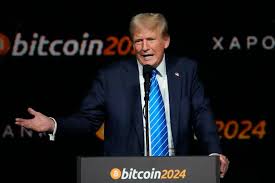
Trump’s Tariff Threats and Their Impact on the Cryptocurrency Market
Introduction
The announcement of new tariffs by President Donald Trump has sent shockwaves through financial markets, with cryptocurrencies taking a particularly hard hit. Bitcoin, Ethereum, Dogecoin, and even Trump’s own meme coin have seen significant drops in value following his remarks. While Bitcoin showed some resilience, other digital assets saw steeper losses, signaling the influence of trade policies on this volatile market. In this article, we explore how Trump’s tariff threats triggered the market slump, and why even his own meme coin couldn’t escape the downturn.
The Impact of Trump’s Tariff Announcement on Cryptocurrencies
On Saturday, February 1, 2025, President Trump announced plans to impose large tariffs on imports from Canada, Mexico, and China. This news sent global financial markets into a tailspin. Cryptocurrencies, which are often seen as high-risk assets, were not immune to the fallout. Bitcoin, the world’s most popular cryptocurrency, experienced a steep decline in its price almost immediately following Trump’s announcement. From an initial value of around $105,000, Bitcoin dropped to about $92,000 by Sunday night.
Bitcoin’s Resilience and Market Rebound
Despite this significant drop, Bitcoin proved to be relatively resilient compared to other cryptocurrencies. By Monday afternoon, the price of Bitcoin had managed to claw its way back over $100,000 after Trump announced a pause on tariffs against Mexico. Bitcoin’s recovery suggests that, as a more established digital asset, it has a certain degree of market stability. Still, the underlying fear of a potential trade war with major global partners remains a concern for investors in the crypto space.
Other Cryptocurrencies Hit Harder by Trump’s Tariff Announcement
While Bitcoin showed some recovery, other well-known cryptocurrencies were not as fortunate. Ethereum, Dogecoin, and several other popular digital assets saw sharp declines following the tariff announcement. These cryptocurrencies, which are often seen as more volatile and speculative, were hit harder by the fear and uncertainty surrounding a potential trade war.
The sharp drop in their value is a reminder of the inherent risks involved in trading these assets. In particular, meme coins, which have gained traction in recent years, saw some of the largest drops. Trump’s meme coin, launched in 2024 on the eve of his second inauguration, was no exception.
Trump’s Meme Coin Takes a Big Hit
One of the more surprising casualties of the crypto sell-off was Trump’s own meme coin. Initially launched with great fanfare, Trump’s coin had experienced a meteoric rise in value after its debut. However, as of Monday, February 3, 2025, the coin was trading at just $19—a staggering 75% decrease from its all-time high.
This drop in value underscores the volatility that often characterizes meme coins, which can soar to great heights on the back of hype and celebrity endorsements, only to crash just as quickly. While Bitcoin’s drop was in part due to the general market reaction to Trump’s tariff threat, Trump’s meme coin’s plunge highlights the vulnerability of such coins to market sentiment and external factors like global trade tensions.
Why the Tariffs Could Be Impacting Crypto Prices
The fear of a global trade war and the uncertainty surrounding the tariffs on goods from China, Mexico, and Canada have created a ripple effect across financial markets. Cryptocurrencies, due to their relatively young and speculative nature, are particularly sensitive to shifts in global economic sentiment. Investors tend to move away from high-risk assets during times of geopolitical uncertainty, which contributes to the downward pressure on prices.
For cryptocurrencies like Bitcoin, which have increasingly become part of institutional investment portfolios, their price movements have started to correlate with broader market trends, particularly those of tech stocks. As large investors face liquidity constraints, cryptocurrencies like Bitcoin are now more exposed to the types of fluctuations seen in traditional financial markets.
Trump’s Tariff Plan and the Bigger Picture
President Trump’s remarks regarding tariffs on imports from China, Canada, and Mexico have created both immediate and long-term uncertainty. While Trump downplayed the immediate effects of the tariffs, warning that Americans might feel “some pain,” his statements have ignited fears that the new import taxes could disrupt global trade flows and destabilize economies. The tariff plan has also extended to the European Union and potentially the United Kingdom, further heightening tensions in the global trade landscape.
Trump’s rhetoric surrounding the tariffs has led to a marked increase in volatility across multiple asset classes, including cryptocurrencies. Though the initial market panic has abated somewhat, investors remain on edge, watching closely to see how the situation develops.
Meme Coins: The Wild West of Cryptocurrencies
Meme coins, like Trump’s meme coin, are a highly speculative and volatile segment of the cryptocurrency market. Often starting as jokes or satirical creations, these coins can experience dramatic price fluctuations depending on market sentiment and media attention. The rise and fall of Trump’s meme coin highlight the risks involved in this corner of the crypto space. While some meme coins can see explosive growth when a large number of people jump on the bandwagon, the downside can be equally steep, as evidenced by Trump’s coin’s 75% drop.
A Broader Look at Cryptocurrencies’ Role in the Global Economy
Bitcoin and other cryptocurrencies were originally created as decentralized alternatives to traditional banking systems. Over time, however, they have moved from fringe assets to mainstream investments, with many institutional investors now holding positions in cryptocurrencies. As Bitcoin and other digital currencies gain respectability, they also face increasing exposure to global economic forces, like tariffs and trade wars, that have traditionally impacted stocks and bonds.
This shift has led to greater price volatility and increased risks for investors, particularly those who hold more speculative assets like meme coins. As cryptocurrency markets become more integrated with traditional financial systems, they are increasingly affected by political decisions, regulatory developments, and trade policies.
Conclusion: Navigating the Future of Cryptocurrency Amid Trade Uncertainty
In conclusion, the trade tensions sparked by President Trump’s tariff threats have had a tangible impact on cryptocurrency markets, affecting both major assets like Bitcoin and smaller meme coins. The price fluctuations seen over the weekend are a reflection of the broader market’s reaction to global trade uncertainty. While Bitcoin’s resilience offers hope to investors, the volatility seen in meme coins like Trump’s coin serves as a reminder of the risks involved in the speculative side of the cryptocurrency market.
As the situation with tariffs continues to evolve, cryptocurrency investors will need to stay vigilant, closely monitoring political developments and their potential effects on the markets. For now, the future of both global trade and digital assets remains uncertain, but one thing is clear—crypto markets are becoming more closely intertwined with the broader economic landscape, and shifts in trade policy could have far-reaching consequences.
Disclaimer: The above press release has been provided by a third party. We do not verify or endorse the content and will not be responsible for any inaccuracies, claims, or damages arising from the same.