

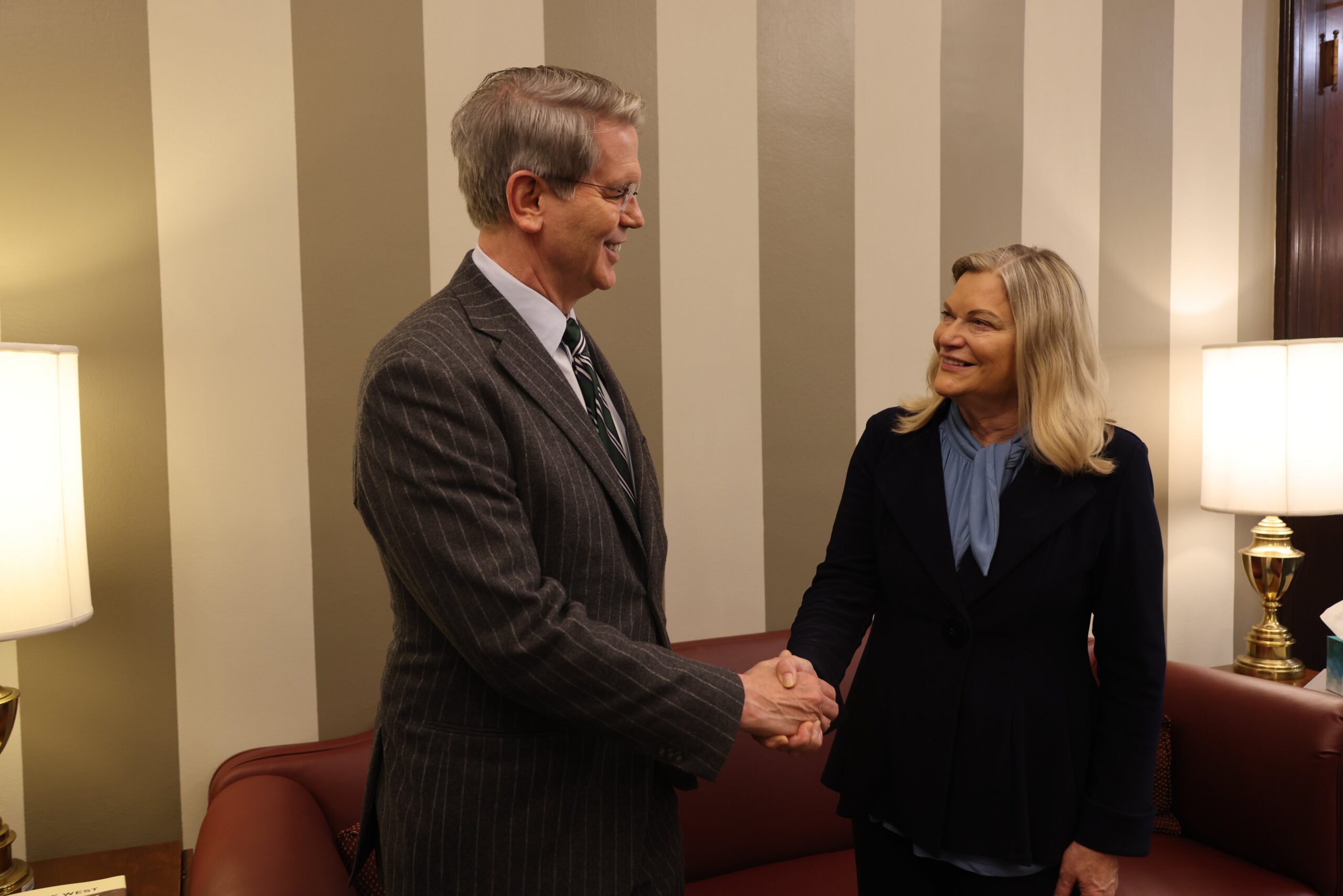
In a bold push to enhance the United States’ position in the global economic race, Senator Cynthia Lummis is championing the idea of establishing a strategic Bitcoin reserve. In a recent meeting with incoming Treasury Secretary Scott Bessent, Lummis expressed confidence that Bessent will support the initiative to adopt Bitcoin as a key reserve asset for the U.S. This push comes at a time when the global competition for technological and economic supremacy, especially in the realm of digital assets, is intensifying.
Senator Lummis, a long-time Bitcoin advocate, has been vocal about her belief that the United States must embrace digital assets like Bitcoin to remain competitive, comparing the need for a Bitcoin reserve to the Space Race of the mid-20th century. She firmly believes that “America must win” this race, especially against other nations like China and Russia, which are rapidly shifting away from the U.S. dollar toward precious metals and digital currencies.
The Strategic Case for a Bitcoin Reserve
Senator Lummis’s push for a Bitcoin Strategic Reserve is part of a broader effort to position the U.S. as a leader in the digital currency space. According to Lummis, adopting Bitcoin as part of the U.S. reserves would give the country a competitive advantage on the global stage. Just as the Space Race galvanized technological innovation in the U.S., Lummis sees the adoption of Bitcoin as an essential move to safeguard the nation’s economic future.
The concept is simple: the U.S. government would purchase and hold large amounts of Bitcoin as a form of economic security. This would not only diversify the U.S. reserves but also send a clear signal to the world that the United States is serious about digital assets and is ready to compete with rising global powers like China and Russia, who are already advancing in the adoption of cryptocurrencies.
Senator Lummis has long been an advocate for Bitcoin and its potential to serve as a store of value and a hedge against inflation. Her efforts to push for a strategic Bitcoin reserve come at a time when the U.S. is grappling with rising global economic competition and the decline of traditional fiat currencies.
Bipartisan Support for the Bitcoin Strategic Reserve
Lummis’s proposal is gaining traction on both sides of the aisle. Initially introduced as a Republican-led initiative, the idea has since garnered support from Democratic lawmakers, including Rep. Ro Khanna, who has expressed backing for the U.S. to take custody of seized Bitcoin and include it in its strategic reserves. This growing bipartisan support signals a shift in the U.S. government’s attitude toward cryptocurrency as an asset class.
In July, Senator Lummis introduced a bill that would use existing government funds to purchase 1 million Bitcoins. This ambitious plan, which has sparked widespread discussion in both political and financial circles, is seen as a forward-thinking move to ensure the U.S. remains at the forefront of digital asset adoption.
Bitcoin as a National Economic Strategy
Advocates of Bitcoin as a strategic reserve believe that adopting it as part of national reserves could fundamentally change the economic landscape. By leveraging Bitcoin, the U.S. could gain a powerful tool to counteract the influence of China and Russia, who have been moving away from the U.S. dollar and into precious metals like gold.
With the value of Bitcoin continuing to rise, incorporating it into U.S. reserves could serve as a hedge against fiat currency fluctuations and global inflation. By positioning Bitcoin as a digital gold, the U.S. could not only stabilize its own economy but also challenge the growing financial influence of rival nations.
A Bitcoin reserve would also provide the U.S. with an asset that is highly liquid, easy to transfer across borders, and virtually immune to government manipulation, unlike traditional forms of wealth like gold or foreign currencies. This gives Bitcoin a unique advantage in today’s global financial environment.
A Divided Industry: Concerns Over Bitcoin Seizures
While many Bitcoin advocates support Lummis’s plan for a Bitcoin reserve, some in the Bitcoin industry express concerns over the U.S. government’s history of Bitcoin seizures. The U.S. government has seized over $1 billion in Bitcoin from criminal investigations and other actions. Critics argue that instead of focusing on building a strategic reserve, the government should be discussing policies to curb these aggressive asset seizures, which they see as a violation of individual property rights.
One anonymous industry leader shared their frustration: “We’re missing the mark by a mile. Shouldn’t we be protecting our rights rather than focusing on the loot?” This sentiment highlights the tension between those who want the government to embrace Bitcoin as an asset and those who fear that such government intervention could undermine the decentralized nature of the currency.
While many Bitcoin enthusiasts view the potential for a strategic Bitcoin reserve as a positive step, they also recognize that it comes with inherent risks. The growing debate surrounding government intervention in Bitcoin’s market reflects broader concerns about the balance between decentralized innovation and state control.
The Future of Bitcoin as a U.S. Reserve Asset
The idea of a Bitcoin strategic reserve in the U.S. represents a significant shift in the country’s approach to digital currencies. Whether the plan succeeds or not, it signals a willingness by policymakers to explore new financial technologies and adapt to the evolving landscape of global economics.
However, the future of Bitcoin as a strategic reserve is still uncertain. Some critics argue that Bitcoin remains a speculative asset, and the risks associated with integrating it into national reserves could outweigh the benefits. Others believe that the move could be crucial in maintaining U.S. leadership in the global economy.
In any case, the U.S. government’s engagement with Bitcoin highlights an important turning point in the evolution of digital currencies. As countries around the world embrace cryptocurrency, the U.S. faces an important decision: continue to lead in digital asset innovation, or risk falling behind in the global economic race.
Disclaimer: The above press release has been provided by a third party. We do not verify or endorse the content and will not be responsible for any inaccuracies, claims, or damages arising from the same.